
Last month, members of the executive and procurement team travelled to China as part of the battery supply workstream for the Kemerton BESS project.
Before the trip, I will admit that I had mixed feelings about attending. Like many business owners, time away from projects, staff and family is never taken lightly. I initially thought the visit may be more ceremonial than practical and questioned whether it was the best use of valuable time.
After visiting six cities in five days, touring three battery manufacturing facilities and one transformer factory, my perspective changed completely.
As someone who does not come from a manufacturing background, I found the experience genuinely eye-opening and humbling.
What stood out immediately was the scale, precision and expertise of Chinese manufacturing. Seeing first-hand how battery cells, battery energy storage systems, solar panels and transformers are produced gave me a new appreciation for the engineering capability that exists within these organisations. The ability to plan, construct and operate manufacturing facilities of this scale is years ahead of anything I have personally witnessed throughout my career.
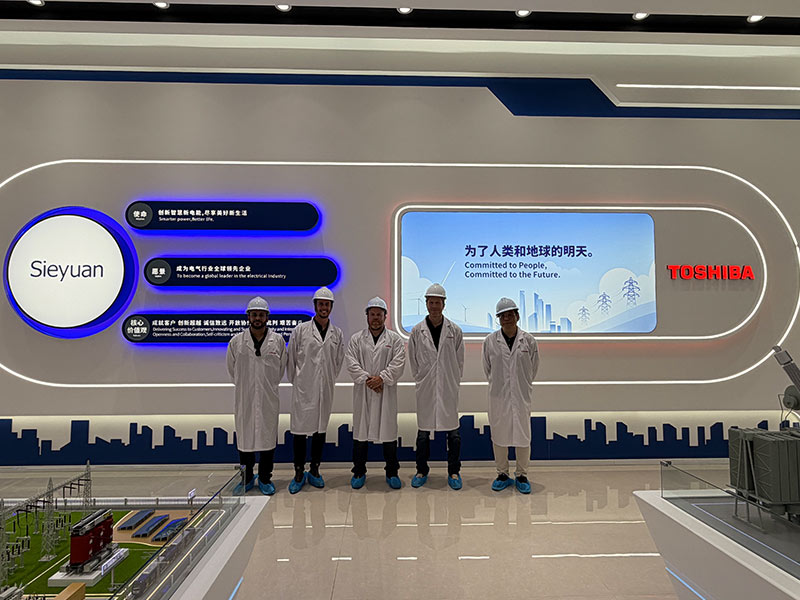
Anyone who tours these facilities, regardless of industry background, would recognise the incredible attention to detail that goes into every stage of the process. From raw materials through to finished products, the systems, automation, quality controls and manufacturing processes are truly world-class.
What impressed me just as much was the investment these companies make in their people.
The facilities we visited were not only technologically advanced, but also exceptionally clean, organised and well maintained. The lunchrooms, childcare facilities, parking areas, locker rooms and employee amenities were of a standard that exceeded anything I have previously encountered. There was a clear focus on creating workplaces that employees could be proud of—safe, efficient and enjoyable environments that support both productivity and wellbeing.
I fully appreciate that we were exposed to some of the industry’s leading manufacturers and that not every facility across China operates at this level. However, when organisations such as Trina, Hithium, CATL and Sieyuan set the benchmark, it is easy to see how those standards influence the broader manufacturing sector over time.
There remains a common stereotype in Australia that products manufactured in China are somehow inferior in quality. Based on what I witnessed, I believe that view is increasingly outdated.
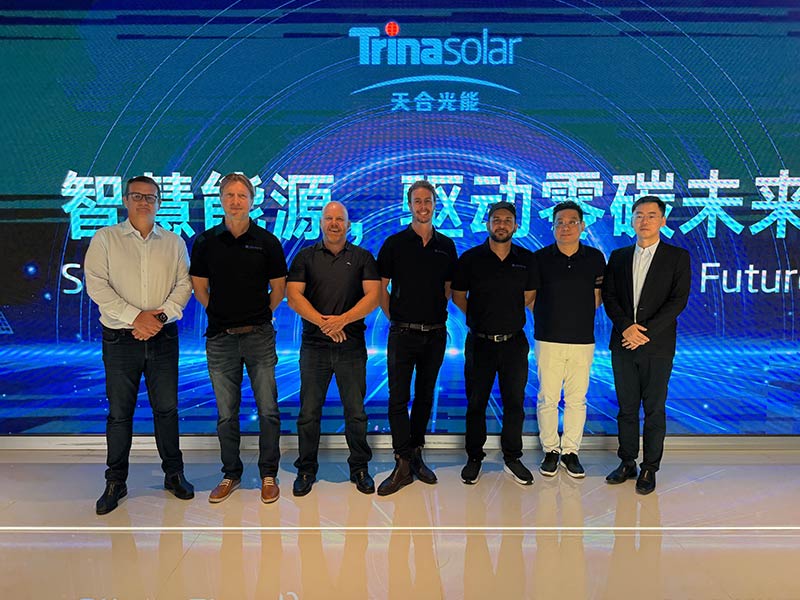
The reality is that quality comes down to design, engineering, process control and investment—regardless of where a product is manufactured. The old saying “you get what you pay for” remains true in every industry. From what I observed, it would be difficult to showcase manufacturing facilities that are significantly better than those operated by Trina, Hithium, CATL and Sieyuan.
Beyond the factory tours, the hospitality we received throughout the trip was outstanding. The food, culture and generosity of our hosts made the long days and constant travel worthwhile and provided valuable insight into the people behind these global businesses.
The visit reinforced an important lesson: assumptions should never replace first-hand experience.
For any business leader, project developer or executive involved in major infrastructure, I strongly recommend taking the time to visit world-class manufacturing facilities, wherever they may be. Seeing the scale of innovation and capability that exists across modern China will challenge old perceptions and provide a deeper understanding of the supply chains that support the energy transition.
For me, the trip didn’t just validate our supplier selection process for Kemerton BESS—it reshaped my view of what modern manufacturing excellence looks like.